3-in-1 Multi-Function Design
2–10× Productivity Increase
Low HAZ
360° Flexible
24/7 Stable
Triple Safety

Water-Cooled
Long Hours. High Precision. Maximum Power.
Built for demanding, continuous welding tasks.
3-in-1 Multi-Function Design
2–10× Productivity Increase
Low HAZ
360° Flexible
24/7 Stable
Triple Safety

Air-Cooled
Small. Lightweight. Go Anywhere.
Perfect for outdoor jobs and on-site mobility.
Why Laser Welding?
Laser welding offers higher precision, reduced thermal impact, and improved productivity compared to traditional welding.
Traditional Welding
| Heat Input |
High
|
| Workpiece Deformation | Large |
| Bonding Strength |
Low
|
| Post-processing |
Grinding required
|
| Welding Speed |
Slow
|
| Consumables Usage |
High
|
| Ease of Operation |
Complex
|
| Personal Safety |
High risk
|
| Environmental Protection |
Polluting
|
| Welding Defects |
More
|
| Welding Quality |
Poorer
|
Advantage
Laser Welding
| Heat Input |
Low
|
| Workpiece Deformation |
Small
|
|
Bonding Strength
|
High
|
|
Post-processing
|
Almost no grinding
|
|
Welding Speed
|
2-10x Faster
|
|
Consumables Usage
|
Low
|
|
Ease of Operation
|
Simple & Easy to learn
|
|
Personal Safety
|
Safer
|
|
Environmental Protection
|
Eco-friendly
|
|
Welding Defects
|
Fewer
|
|
Welding Quality
|
Excellent
|
Product Series
The right configuration for your specific workshop needs
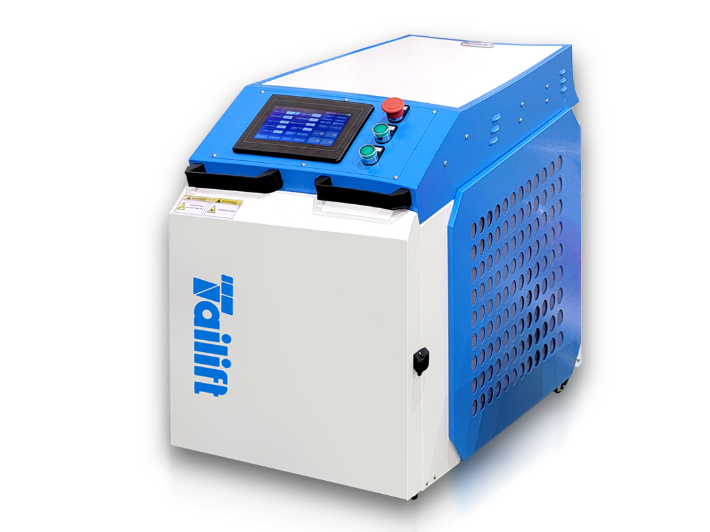
Industrial Grade Cooled
Water Cooled Laser Welding Machine
LW1500 / LW2000 / LW3000
Designed for high-intensity, 24/7 production. Equipped with professional industrial chillers for maximum power stability.
- Laser7+1 welding and cutting process professional all-in-one machine
- Get started in 10 minutes
- 2 - 10 times efficiency improvement
- Precision welding minimal effects of thermal distortion
- 360° flexible movement
- Three safety protections
Portable Smart Air Cooled
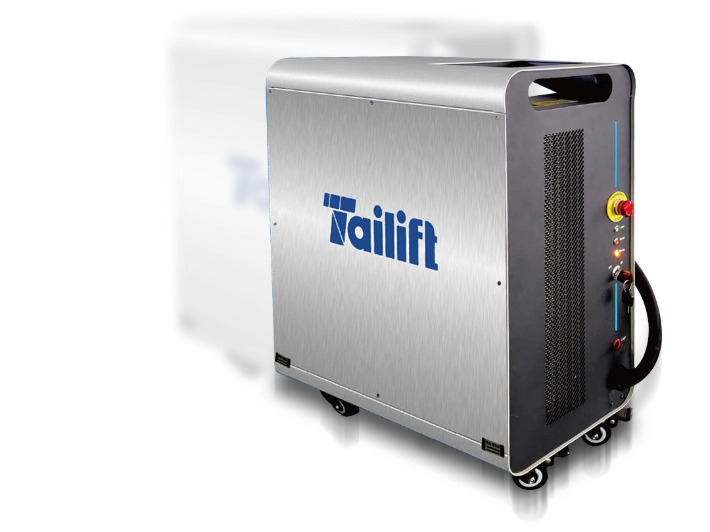
Air Cooled Laser Welding Machine
LW1500A / LW2000A
Lightweight at only 45kg. Compact like a suitcase, perfect for mobile stations or outdoor on-site repairs.
- Simple use : Fully in intelligent minima list operation system, simple settings, easy to learn and operate.
- High efficiency : The photoelectric conversion rate exceeds 40%.
- Excellent heat dissipation performance : Ensure continuous illumination for 7 hours/24 days.
- Welding aesthetics: Thanks to the power support overlarge pumps and precise energy control systems, beam quality is stable, with minimal heat influence on welding.
- Operational safety: Multi-layered sensors and interlocking safety devices.
Technical Parameter Comparison
| Water Cooled | |||
|
Equipment Model
|
LW1500 / LW2000 / LW3000 | ||
|
Laser Power (W)
|
1500W / 2000W / 3000W
|
||
|
Laser Wavelength (nm)
|
1080 nm
+ - 10 nm
|
||
|
Fiber Length (M)
|
Standard 10 M /
Option 15 M
|
||
|
IoT
|
Option |
||
|
Cooling Type
|
Water Cooled
|
||
|
Welding Joint Selection
|
Oscillation Welding /
Wobble Welding
|
||
|
Welding Method
|
Continuous /
Interval Filler / No Filler |
||
|
Ambient Operating Temperature
|
15~35℃
|
||
|
Ambient Operating Humidity
|
30%~70%
|
||
|
Working Voltage (V)
|
AC220 ± 10% / 60Hz
|
||
|
Applicable air pressure
|
1~1.5 bar
|
||
|
Advice on gases
|
Ar、N2 、H2、O2、Mixed gas
、Inert gas |
||
|
Welding Thickness(mm) |
Carbon Steel / Stainless Steel
≤ 3 /
≤ 4 /
≤ 6 Aluminum / Copper ≤ 2.5 / ≤ 3 / ≤ 5 |
||
|
Welding Thinnest (mm)
|
≥ 0.8
|
||
|
Equipment Dimensions (L*W*H)
|
Handheld Laser Welding Machine
1050*770*750 mm
Wire Feeder 250*560*350 mm |
||
|
Equipment Weight
|
Handheld Laser Welding Machine 75kg Wire Feeder 12kg |
||
| Air Cooled | |||
|
Equipment Model
|
LW1500A / LW2000A | ||
|
Laser Power (W)
|
1500 W /
2000 W
|
||
|
Laser Wavelength (nm)
|
1080
+ - 10 nm
|
||
|
Fiber Length (M)
|
Standard 10 M /
Option 15 M
|
||
|
Working Voltage (V)
|
AC220 ± 10% / 60 Hz
|
||
|
Applicable air pressure
|
1~1.5 bar
|
||
|
Advice on gases
|
Ar、N2、H2、O2、Mixed gas
、Inert gas |
||
|
Welding Thickness(mm) |
Carbon Steel / Stainless Steel
≤ 3 /
≤ 4 Aluminum / Copper ≤ 2.5 / ≤ 3 |
||
|
Welding Thinnest (mm)
|
≥ 0.8
|
||
|
Equipment Dimensions (L*W*H)
|
LW1500A
510*307*588 mm
LW2000A 1080*580*780mm |
||
|
Equipment Weight
|
LW1500A
45 kg
LW2000A 53 kg |
||
|
IoT
|
Option
|
||
|
Wire Feeder Dimensions (L*W*H)/Weight
|
250*560*350 mm / 12kg
|
||
|
Cooling Type
|
Air Cooled
|
||
Success Stories & Industrial Applications
Real-world implementations of our handheld laser welding solutions.
Air-Cooled Handheld Laser Welding
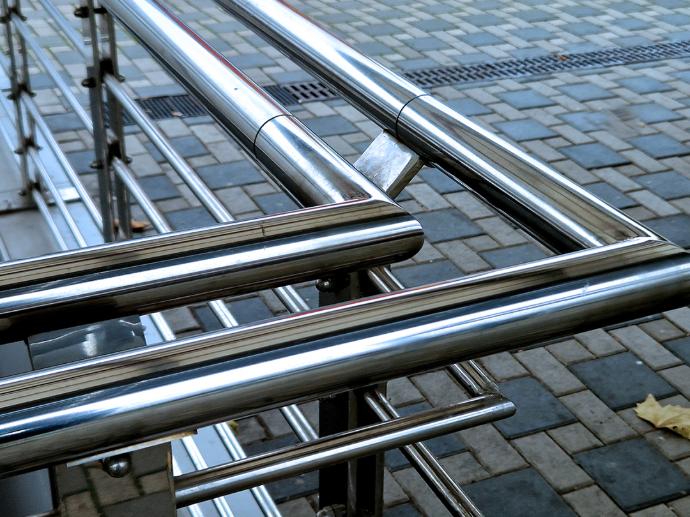
Stainless Steel Architectural Metal Contractors
Client Background
The client in this case is a mid-sized stainless steel architectural metalworks company that has long undertaken projects such as door frames, railings, stair handrails, and metal trim finishes.
As most projects involve on-site installation, working conditions are highly variable, schedules are tight, and appearance standards are high, making this an industry that relies heavily on the experience of skilled craftsmen.
Previously, TIG welding was the primary method used. However, exposed weld points, excessive spatter, and heavy indoor fumes often led to increased post-processing costs and could easily affect the consistency and overall appearance of the finished products.
Challenges Faced
- High aesthetic requirements: Exposed weld seams and excessive spatter require extensive grinding and finishing, negatively impacting project timelines.
- Labor shortages: TIG welding demands highly skilled welders, with long training periods and difficulty in controlling delivery schedules.
- Heavy indoor fumes: In shopping malls and residential projects, TIG welding fumes often cause disruptions and lead to complaints.
Solution
Introduction of an Air-Cooled Handheld Laser Welding Machine
- Lightweight, air-cooled design : Compact in size, making it ideal for highly mobile on-site construction work.
- Fine weld seams with extremely low spatter : Smooth and clean welds significantly reduce the time required for post-weld polishing and grinding.
- Low learning curve : New operators can become proficient within approximately 1–2 hours, eliminating heavy reliance on highly experienced welders.
- Small heat-affected zone and minimal deformation : Delivers a noticeably improved appearance, especially for thin plates and stainless steel architectural components.
Implementation & Benefits
- Significant improvement in the appearance of decorative welds.
- Enhanced product consistency, resulting in fewer customer complaints and reduced rework rates.
- Construction efficiency increased by 2–5 times.
- On-site installation time greatly shortened, accelerating overall project schedules.
- Post-processing costs reduced by 30–60%.
- Less grinding time required, with material surfaces no longer blackening or deforming.
- Greater workforce flexibility.
- The company successfully enabled new hires to quickly take over on-site operations, effectively easing labor constraints.
Water-Cooled Handheld Laser Welding
Metal Fabrication Plant Production Upgrade
Client Background
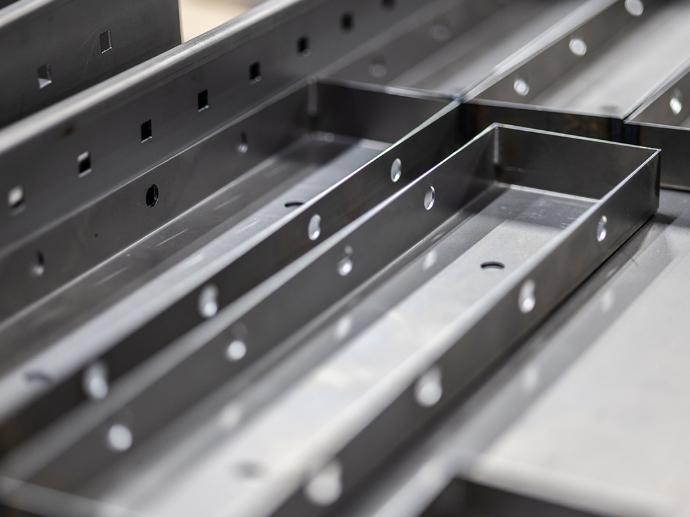
The metal fabrication plant has approximately 40 employees and primarily manufactures stainless steel enclosures, aluminum alloy frames, and sheet metal structural components.
As orders continue to increase, the company must boost production capacity while maintaining high weld appearance quality.
Traditional TIG welding is slow, incurs high post-processing costs, and relies heavily on skilled technicians, which has become a major production bottleneck.
Challenges Faced
- Insufficient production capacity: TIG welding is slow and unable to meet high-volume order demands.
- Thin sheet deformation: Leads to scrap, especially pronounced in aluminum processing.
- High post-processing costs: Extensive grinding and polishing result in wasted labor hours.
- Inconsistent quality: Weld quality varies from one welder to another, making it difficult to maintain consistency.
Solution
- Introduction of a Water-Cooled Handheld Laser Welding Machine
- The water-cooling system enables long-duration continuous operation.
- No power derating and no overheating, making it suitable for high-duty production lines.
- Three-in-one functionality (welding + cutting + cleaning) improves production-line flexibility.
- A single machine can perform multiple processes, reducing equipment changeover time.
- Improved weld consistency.
- Concentrated and stable laser energy prevents burn-through on thin sheets
- High-power options (1500W–3000W).
- Capable of processing thinner materials while overcoming the limitations of traditional welding methods.
Implementation & Benefits
- Welding efficiency increased by 2–10 times.
- Production time significantly shortened, enhancing order fulfillment capacity.
- Post-processing costs reduced by 30–70%.
- Smooth weld seams, with grinding no longer a major bottleneck.
- Lower scrap rates and improved material utilization.
- Marked improvement in success rates for aluminum and thin-sheet welding.
- Rapid onboarding of new operators, reducing reliance on highly skilled labor.
- After implementation, processes that previously required 2–3 years of experience can now be mastered by new operators within one week.
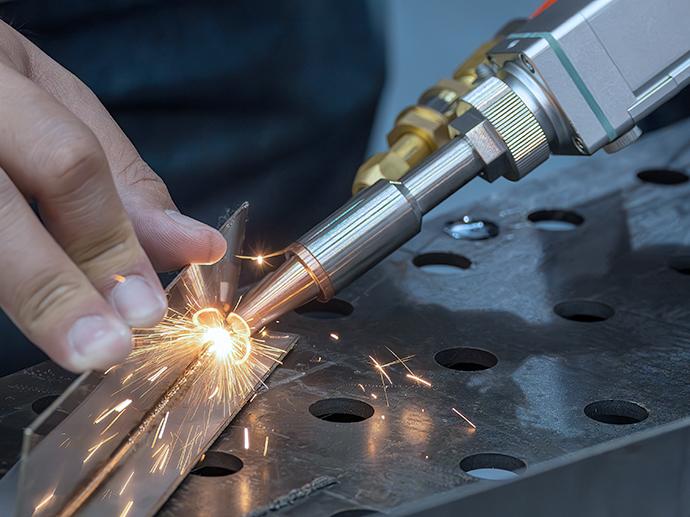
Water-Cooled Handheld Laser Welding
Sheet Metal Fabrication Industry
Client Background
A small to mid-sized sheet metal fabrication company with approximately 30 employees primarily undertakes stainless steel and iron sheet welding, cutting, and customized processing orders. On-site operations rely mainly on **traditional TIG welding and distributed equipment.
As order volumes grow and delivery pressures increase, the company faces challenges such as insufficient welding manpower, long training periods, and difficulty controlling quality.
The client aims to introduce equipment that is easy to operate, highly efficient, and capable of integrating multiple processes, in order to improve overall sheet metal processing efficiency and on-site flexibility without significantly increasing labor, meeting the demands of future order growth.
Challenges Faced
- Labor issues : Weld quality heavily depends on experienced welders, making it difficult for new employees to get up to speed quickly.
- Lengthy post-weld processing : Uneven weld seams require additional grinding and leveling, increasing labor workload and putting pressure on delivery schedules.
- Thin-sheet welding and heat management : Many sheet metal parts are thin and small, making them prone to deformation, burn-through, and long heat-cooling wait times during welding.
- Frequent order changes : Long process changeover times make it difficult to quickly respond to urgent customer orders.
Solution
- Sufficient strength
The heat-affected zone, material deformation, and stress during laser welding are minimal, allowing the welded material to retain excellent mechanical properties—making it ideal for high-strength joints. - Improved efficiency
Lowers the entry barrier for welding. Even when skilled technicians are stretched thin, inexperienced operators can quickly start welding. It also provides experienced welders with a more precise and manageable tool, giving them confidence to tackle complex welding tasks. - Precision components
Capable of handling small and highly precise parts, allowing welding without damaging the base material. Particularly suitable for thin sheets and high-precision component fabrication. - Curved and contoured applications
Excels at welding parts with curves or arcs, offering flexible and precise control. Enables high-quality welding on complex geometries, meeting diverse design requirements.
Implementation & Benefits
- Optional dual wire-feed module:Can feed two welding wires simultaneously, effectively enhancing filler efficiency for large weld seams and improving joint strength and molten pool stability.
- Integrated cooling and electronic control system: Equipped with rollers, making it suitable for in-plant maintenance or on-site construction.
- Supports high thermal conductivity metals (such as copper and aluminum) and high-strength structural components (such as mold steel), meeting the welding requirements of various parts.
- High weld seam flatness: Laser-welded components generally require only minimal finishing before proceeding to downstream processes such as painting or assembly.
- Gap-filling and reinforcement for assembled parts with misalignment or uneven edges: Ideal for panel edging, enclosure side reinforcement, improving fitment and overall airtightness. In situations requiring medium-to-thick plate welding where the production line cannot achieve high-precision positioning, it serves as a highly flexible compensation technique.
Handheld Laser Welding Application Fields & Solutions
Industry 1
Metal Processing / Hardware Manufacturing
Common Materials
Stainless steel, carbon steel, galvanized sheet, Aluminum alloy, iron
Applications
- Sheet metal joining
- Enclosures and cabinets
- Welding of irregular-shaped workpieces
Problems Solved and Feedback
- Poor weld appearance → Smooth, fine weld seams; minimal grinding required
- Severe deformation → Small heat-affected zone, greatly reduced distortion
- Low welding efficiency → Welding speed increased by 2–5 times
Industry 2
Machinery & Component Manufacturing
Applications
- Machine frames
- Brackets and bases
- Structural parts repair and reinforcement
Problems Solved and Feedback
- TIG welding requires highly skilled operators → Handheld laser welding is easy to learn
- Large or fixed workpieces are hard to move → On-site welding possible
- Extensive post-weld finishing → Shorter post-processing time
Industry 3
Stainless Steel Doors, Windows & Architectural Decoration
Applications
- Stainless steel door frames
- Handrails and guardrails
- Decorative metal structures
Problems Solved and Feedback
- Visible weld spots affect aesthetics → Fine, clean weld seams
- Excessive spatter with traditional welding → Almost spatter-free
- Heavy smoke during indoor work → Lower heat input, less fumes
Industry 4
Kitchen Equipment, Sanitary Ware & Home Appliances
Applications
- Sinks, range hoods
- Kitchen equipment housings
- Metal parts for sanitary ware
Problems Solved and Feedback
- Thin sheets burn through easily → Concentrated energy, precise control
- High polishing cost after welding → Reduced post-finishing costs
- High appearance requirements → Decorative-grade weld quality
Industry 5
Aluminum & Dissimilar Material Welding
Applications
- Aluminum alloy frames
- Aluminum plates and pipes
- Steel + stainless steel (selected applications)
Problems Solved and Feedback
- Aluminum dissipates heat quickly and is difficult to weld → High energy density enables fast fusion
- Dissimilar material welding failure → Improved through power and waveform adjustment
Industry 6
Mold Repair & On-Site Maintenance
Applications
- Crack repair for molds
- Mechanical parts restoration
- Small-area precision repairs
Problems Solved and Feedback
- Traditional repair welding causes excessive heat damage → Precise localized heating
- Dimensional accuracy affected after repair → Minimal impact on original dimensions
- Disassembly not feasible → On-site repair possible
Summary of Problems Solved by Handheld Laser Welding
| Customer Pain Point | Laser Welding Solution |
|---|---|
| Shortage of skilled welders | Low learning curve, fast operator training |
| High post-weld processing cost | Fine weld seams reduce grinding and polishing |
| Thin materials burn easily | Small heat-affected zone, precise energy control |
| Low production efficiency | High-speed welding, suitable for mass production |
| High aesthetic requirements | Clean, smooth, decorative-grade welds |
| Difficult on-site operations | Portable, highly flexible handheld system |
Ideal Customer Profiles for Handheld Laser Welding
Video
Customer Testimonials
Looking for the right laser welding solution?
Contact us
- Product inquiry
- Technical consultation
- Application support